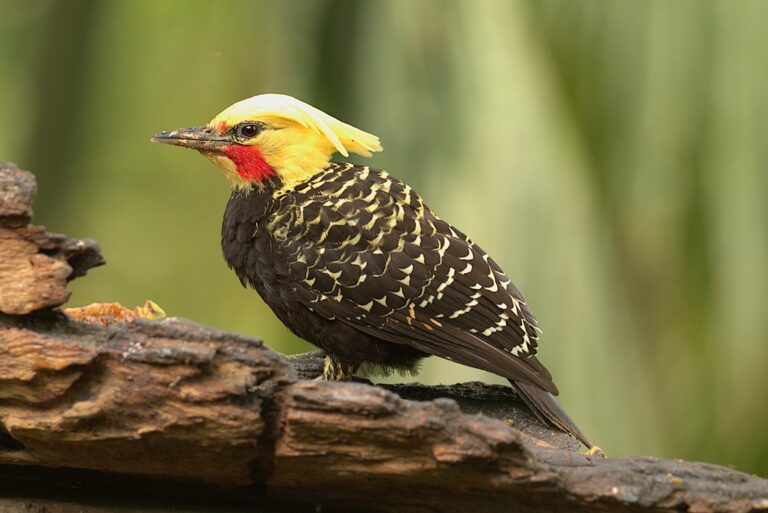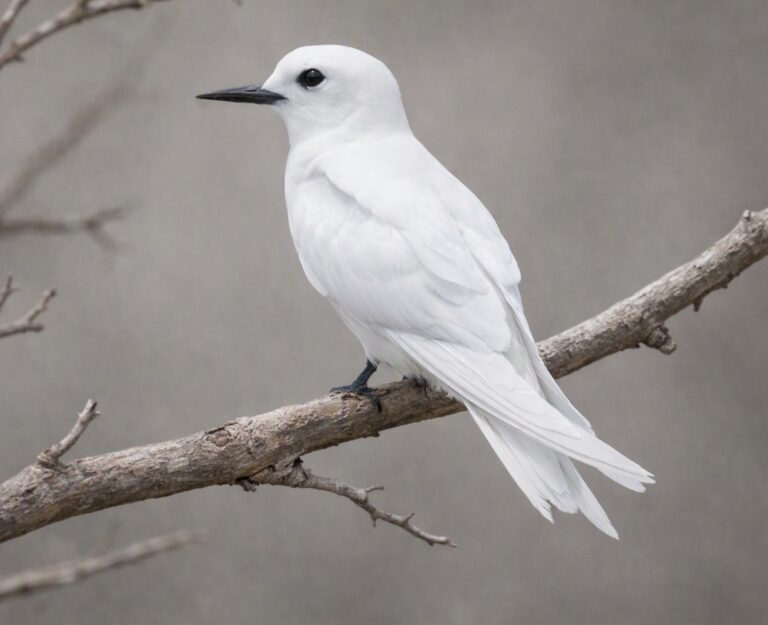
The route begins on the coast near Icapuí, before ascending the forested slopes of Serra de Baturité, where highlight species include Grey-breasted Parakeet, Ceará Gnateater, and Buff-breasted Tody-Tyrant. Subsequently, the expedition moves to the impressive granite formations of Quixadá with the aim of spotting Pygmy Nightjar and White-browed Guan. Heading south, exploration continues through Chapada do Araripe via Juazeiro do Norte and Crato, a key location to find the majestic Araripe Manakin—one of the ultimate icons of Brazilian wildlife—alongside White-browed Antpitta and Great Xenops.
The arid Caatinga environment around Canudos marks a dramatic change in landscape and shelters one of the tour’s top highlights: Lear’s (Indigo) Macaw, a Critically Endangered species. The journey continues toward the imposing terrain of Chapada Diamantina, established as an undisputed landmark for birdwatching in the country. This vast plateau hosts several local endemics, including Hooded Visorbearer, Grey-backed Tachuri, Diamantina Tapaculo, and the recently described Sincorá Antwren. With over 430 recorded species in the region, the birding experience is second to none, offering the chance to find numerous fascinating birds. In short, this traditional circuit condenses the most representative habitats and exclusive birds of Northeast Brazil into an experience of just 16 days.
Day 1 – Fortaleza to Icapuí
Upon arrival at Fortaleza Airport in Ceará, we immediately set off on a scenic three-hour journey to Icapuí. This coastal paradise offers a mosaic of ecosystems: mangroves, estuaries, rivers, and lagoons that host herons, ibises, kingfishers, shorebirds, and other aquatic species. In the restinga, coastal scrub, and dune vegetation, we’ll find species uniquely adapted to dry, sandy environments typical of Northeast Brazil. Strategic stops along the way will maximize birding opportunities.
Overnight in Icapuí.
Day 2 – Icapuí (Mangrove Area) to Guaramiranga
In the morning, our targets include Little Wood Rail, Bicolored Conebill, Mangrove Rail, Tropical Mockingbird, Cattle Tyrant, Guira Cuckoo, Yellowish Pipit, Spot-backed Puffbird, and more. By mid-morning, we move to a different ecosystem: the Serra de Baturité. Guaramiranga, located here, is one of Ceará’s most important humid forest areas. Its altitude, cooler climate, and higher humidity allow the presence of montane Atlantic Forest surrounded by the drier landscapes of the Northeast.
Overnight in Guaramiranga.
Day 3 – Guaramiranga, Serra de Baturité Today’s highlights include Swallow-tailed Hummingbird, Gould’s Toucanet (endemic subspecies baturitensis), Ochre-backed Woodpecker, Wing-banded Hornero, Gray-headed Spinetail, Ochre-cheeked Spinetail, Rufous-breasted Leaftosser, Southern White-fringed Antwren, and the rare Ceará Gnateater.
Overnight in Guaramiranga.
Day 4 – Guaramiranga to Quixadá We’ll revisit nearby forests to add more species, targeting Grey-breasted Parakeet, Buff-breasted Tody-Tyrant, Ceará Gnateater, Ceará Woodcreeper, Ochraceous Piculet, Guianan Tyrannulet, Gould’s Toucanet, Gray-headed Spinetail, and Rufous-breasted Leaftosser. By midday, we head to Quixadá.
Overnight in Quixadá or Pedra dos Ventos.
Day 5 – Quixadá Area to Potengi Morning birding in Caatinga habitat with key species such as White-naped Jay, Caatinga Parakeet, Pygmy Nightjar, Black-bellied Antwren, Pale Baywing, Long-billed Wren (Cantorchilus longirostris bahiae), Caatinga Cacholote, Ochre-backed Woodpecker, and the endemic White-browed Guan.
Overnight at Sitio Pau Preto in Potengi.
Day 6 – Potengi, Sitio Pau Preto We dedicate the day to Caatinga specialists: White-browed Antpitta, Caatinga Antwren, White-throated Seedeater, Scarlet-throated Tanager, Great Xenops, Red-shouldered Spinetail (Synallaxis hellmayri), Lesser [Bahia] Wagtail-Tyrant, Greater [Caatinga] Wagtail-Tyrant, Stripe-backed Antbird, Campo Troupial, Red-cowled Cardinal, Grey Pileated Finch, Least Nighthawk, Rufous and Scissor-tailed Nightjars.
Overnight at Sitio Pau Preto.
Day 7 – Potengi to Juazeiro do Norte Targets include Grey-eyed Greenlet, Rusty-margined Guan, Least Nighthawk, Broad-tipped Hermit, Spotted Piculet, Silvery-cheeked and Planalto Slaty Antshrikes, Caatinga and Black-bellied Antwrens.
Overnight in Juazeiro do Norte.
Day 8 – Juazeiro do Norte, Chapada do Araripe, Arajara Park Chapada do Araripe is a vast plateau with humid forests, Caatinga, Cerrado, and transitional zones. Springs and humidity create unique conditions in this semi-arid landscape. Our main target is the iconic Araripe Manakin, confined to a small forest patch. In the afternoon, we’ll have a second chance for White-browed Antpitta.
Overnight in Juazeiro do Norte.
Day 9 – Juazeiro do Norte to Lagoa dos Gatos We travel about eight hours to Lagoa dos Gatos, stopping to observe wetland birds. This transition zone between Atlantic Forest and Caatinga offers a mix of forest fragments, secondary vegetation, farmland, pastures, and small water bodies.
Overnight in Lagoa dos Gatos.
Day 10 – Lagoa dos Gatos, Pedra D’Antas Full-day birding in Pedra D’Antas, a protected Atlantic Forest area. Targets: Seven-colored Tanager, Long-tailed Woodnymph, Ruby-topaz Hummingbird, Black Jacobin, Ceará Gnateater, Pinto’s Spinetail, Alagoas Tyrannulet, Eared Pygmy Tyrant, Forbes’s Blackbird, Ultramarine Grosbeak, Barred Forest Falcon, Ceará Woodcreeper.
Overnight in Lagoa dos Gatos.
Day 11 – Lagoa dos Gatos to Canudos Early departure for a seven-hour drive to Canudos, with stops for grassland and wetland species. Second chance for Seven-colored Tanager.
Overnight in Canudos.
Day 12 – Canudos Area A highlight of the trip: inside a reserve protecting parakeets and macaws such as Lear’s Macaw, Blue-crowned Parakeet, Blue-winged Macaw, King Vulture, and Black-chested Buzzard-Eagle. We’ll hear the calls of Lear’s Macaw in this dramatic, lunar-like landscape.
Overnight in Canudos.
Day 13 – Canudos to Lençóis Transfer to Lençóis with multiple birding stops. Lençóis lies in the heart of Chapada Diamantina, a region of extraordinary diversity with campos rupestres, Cerrado, Caatinga, seasonal forests, and riparian vegetation.
Overnight in Lençóis.
Day 14 – Lençóis, Chapada Diamantina, Volta da Serra Targets include Horned Sungem, Grey-backed Tachuri, Serra Finch, Campo Flicker, Blue Finch, Collared Crescentchest, Rufous-sided Scrub Tyrant, Pale-breasted Spinetail, Cinnamon Tanager, White-banded Tanager, Planalto Tyrannulet, Gray-eyed Greenlet, White-rumped Tanager, White-eared Puffbird, Caatinga Antwren, Rufous-winged Antshrike, Spix’s Spinetail, Bahia Wagtail-Tyrant, Striped-backed Antwren, Stripe-tailed Yellow Finch, Black-capped Antwren, East Brazilian Chachalaca, Black-billed Antwren, Planalto Slaty Antshrike, Helmet Manakin. Overnight in Lençóis.
Day 15 – Lençóis, Chapada Diamantina, Volta da Serra Exploring new trails, we’ll seek Hooded Visorbearer, Sincorá Antwren, Collared Crescentchest, Pale-bellied Tyrant-Manakin, Surucua [Orange-bellied] Trogon, Black-throated Saltator, Broad-tipped Hermit, São Francisco Sparrow, Shrike-like Tanager, Sooty-fronted Spinetail, Pale-throated Pampa Finch, White-naped Jay, Spot-backed Woodcreeper, Pileated Finch, Spotted Nothura, Velvety Black Tyrant, Maroon-bellied Parakeet.
Overnight in Lençóis.
Day 16 – Lençóis to Mucugê, Salvador de Bahia Final birding day with targets such as Sincorá Antwren, Gilt-edged Tanager, Hooded Visorbearer, Broad-tipped Hermit, White-naped Jay, Gray-eyed Greenlet, East Brazilian Chachalaca, Spot-backed Puffbird, Blue Finch, and more. The tour concludes in Salvador, with the option to overnight or fly from Salvador Bahia Airport (Deputado Luís Eduardo Magalhães) to São Paulo (Guarulhos) for your connecting flight home.